A seat at the table
A few years ago, I took part in a two-day meeting of CEOs from organizations working in Africa. We had gathered to set shared goals and increase our collective impact in one country. There was just one problem. Every organization in the room was based in the United States. Not one African was at the table.
I’ve thought about that meeting a lot lately, because the world is about to sit down at a much bigger table.
In 2015, the nations of the world signed on to 17 Sustainable Development Goals. Goal 3 promised healthy lives and well-being for all, at all ages, by 2030. That deadline is now just over four years away. The conversation in New York and Geneva has turned to a new question: what comes next?
Who will be at that table? Will the doctors, nurses, and hospitals serving the world’s poorest communities be heard? Or will we repeat the mistake of that CEO meeting on a global scale? Let me share where the process stands, what is likely to change, and why I believe faith-based healthcare needs a voice in it.
Where the process stands
Here’s the short version: formal negotiations on what follows the SDGs haven’t started yet. They begin in September 2027.
In 2024, the UN adopted the Pact for the Future. It asks the 2027 SDG Summit to consider how to advance sustainable development “by 2030 and beyond.” Notice what it doesn’t say. It doesn’t commit anyone to a new set of goals. As of this fall’s General Assembly, there is still no agreed framework for after 2030.
This year has been groundwork. Governments are negotiating the declaration leaders will adopt at the 2027 Summit. UN analysts are preparing the last major progress report before the deadline. And a new UN Secretary-General takes office on January 1, 2027, and will guide the whole process.
The starting point is sobering. The 2026 Sustainable Development Report found only about 16.5% of SDG targets on track. None of the 17 goals is likely to be met worldwide. Meanwhile, the U.S. government formally rejected the 2030 Agenda in 2025.
Road to the post-2030 agenda · 2024 to 2031
September 2027 is the moment to watch: the SDG Summit and the UN’s universal health coverage meeting happen together.
What’s likely to change
Nothing is decided. But the proposals on the table point in a clear direction.
- The shape itself is in question. A GIZ study lays out four futures: no new agenda, competing agendas, an extension of the current goals, or one new agenda. Given today’s geopolitics, many observers expect an extension or a slimmer agenda.
- Less about goals, more about delivery. The world didn’t fail because the goals were wrong. It failed to carry them out. Researchers behind the 2026 report propose keeping the goals but organizing the work around six “transformations,” with universal health among them.
- Money and institutions matter more. Expect more focus on financing, debt, and the role of the World Bank and IMF.
- New topics. Artificial intelligence, and better ways to measure progress than GDP.
- A longer horizon. Ten, 15, and 20 years have all been floated, possibly with milestones along the way.
For those of us in global health, one thing seems likely to hold: health stays at the center, framed as universal health coverage.
Why faith-based health care belongs in the conversation
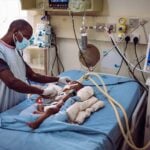
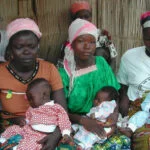
When diplomats talk about universal health coverage, they usually picture ministries of health and national insurance programs. That is an important part of the picture. But in much of sub-Saharan Africa, church and mission hospitals deliver a large share of the care. In many rural districts, they are the only hospital for hours in any direction.
Through the Christian Health Service Corps, we walk alongside Christian hospitals in 29 low- and middle-income countries. Last year, we helped bring care to more than 1.2 million people while strengthening those healthcare facilities and systems.
Our work is not crisis relief. It is about building community capacity for healthcare. We train national surgeons and family physicians. We treat children with severe acute malnutrition, repair obstetric fistulas, and strengthen hospitals that will be serving their communities long after we are gone. That is exactly the kind of sustainable, locally owned health system the next global agenda says it wants.
If the people writing that agenda never hear from these hospitals, they will plan as though they don’t exist. And the gap we are working to close will stay open.
How we get a seat at the table
You don’t need UN credentials to be heard. Here is where the doors are, for us and for any mission hospital or faith-based health organization.
- Join the coalitions already in the room. The Civil Society Engagement Mechanism for UHC2030 has more than 1,300 member organizations. It shapes civil-society input to the UN’s universal health coverage meeting in September 2027.
- Speak at the UN hearing, before the end of May 2027. The General Assembly will hold a one-day hearing ahead of that meeting. Organizations without UN status can apply to take part. Front-line evidence from mission hospitals is exactly what that room needs.
- Speak together. Networks like Christian Connections for International Health and the Africa Christian Health Associations Platform carry the voice of church health systems. A network is heard in ways a single charity is not.
- Work through national governments. Governments write the declarations. In most countries, a national Christian health association already talks to the health ministry. That’s how the case for training local doctors and surgeons reaches the negotiating table.
- Show up regionally. The UN’s regional forums for Africa and Latin America are open to civil society, and they feed directly into the 2027 Summit.
- Think long-term. The detailed targets will be written between 2028 and 2030. Organizations that apply for UN consultative status by June 1, 2027, can have it in hand when those talks begin.
One caution, and it goes back to that CEO meeting. Getting a seat at the table is not about outsiders speaking for others. The best voices in this conversation are the African, Asian, and Latin American doctors and nurses who lead these hospitals every day. Our role is the same as it has always been in good development work: surrender ownership, build capacity, and help our partners be heard. As I wrote in When Healthcare Hurts, the answer to the lion problem will always come from within the community.
Healthcare for all by 2050
We have been here before. In 1978, at Alma-Ata, the nations of the world promised “health for all” by the year 2000. Then came the Millennium Development Goals, and then the SDGs. Each fell short. Yet each one drove real progress: child deaths fell by more than half between 1990 and 2015. Global goals matter, even when we miss them.
Two of the open questions now are how long the next agenda should run and whether universal health stays at its heart. We have already answered both for ourselves.
Our petition, Healthcare for All by 2050, looks past 2030 to the world we believe God is calling us to help build. It is a world where no mother dies in childbirth for lack of a surgeon, and no child dies of a disease we know how to treat.
The next global agenda will be written over the next four years. I want the voices of Christian hospitals, and the people who support them, to be part of it. Would you join us? Sign the petition, share it with your church, and stand with us as we bring that message to the table. Global Healthcare Advocacy – Christian Health Service Corps
Sources
- IISD SDG Knowledge Hub: How We’re Tracking Beyond 2030 Discussions
- Forus: From UNGA to 2027
- D+C: Four future scenarios for the 2030 Agenda
- Sustainable Development Report 2026 summary
- ESG Dive: U.S. denounces UN SDGs
- UHC2030: 2027 UHC High-Level Meeting FAQs
- UHC2030: Civil society engagement
- ECOSOC: Apply for consultative status