
The morning mist clings to the hills surrounding Tulabo village as Dr. Lindsey Cooper makes the familiar 10-kilometer journey from Centre Medicale Evangelique-Nyankunde. In her hands, she carries more than medical supplies: she carries hope for children teetering on the edge between life and death from severe malnutrition in one of the world’s most troubled regions.
The Democratic Republic of Congo’s eastern provinces face a devastating childhood malnutrition crisis, with over six million children suffering from chronic malnutrition nationwide. Here in the hills of Eastern DRC, where tribal tensions simmer and poverty runs deep, Dr. Cooper witnesses both the heartbreak and the miracles that define emergency nutrition work in conflict zones.
The Faces Behind the Statistics
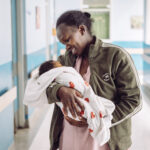
In Tulabo, childhood malnutrition isn’t just a statistic: it’s Emmanuel, whose tiny frame barely registered on the scale when he first arrived. It’s Grace, whose mother walked three hours through dangerous terrain just for a chance at treatment. These children represent the 48% of South Kivu province’s children who suffer from malnutrition, their young lives hanging in the balance as families struggle with extreme poverty and food insecurity.
“When we see the sickest of the sick patients in the hospital, when children die despite our best efforts, it can be crushing,” Dr. Cooper reflects on her work as a hospitalist specializing in pediatric care. “But then something happens in Tulabo that reminds me why we’re here: why this community-based approach to fighting malnutrition matters so deeply.”
A Community United Against Hunger
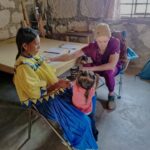
The ambulatory nutrition program in Tulabo operates as more than just medical intervention: it’s a lifeline woven into the fabric of community life. At its heart stands Judith, a remarkable community liaison who has transformed from concerned neighbor to proficient nutritionist under Dr. Cooper’s guidance.
Each week, Judith conducts consultations with malnourished children, her trained eyes quickly assessing nutritional status and growth patterns. Children with moderate malnutrition receive carefully formulated corn and soy flour for porridge, providing essential supplemental calories that can mean the difference between recovery and deterioration.
“Judith has become incredibly skilled at identifying early warning signs,” Dr. Cooper explains. “She understands that in emergency nutrition work, every day counts. A child who seems stable today can slip into severe malnutrition within weeks without proper intervention.”
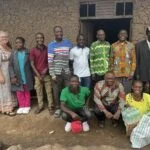
The program brings together village chiefs, community elders, pastors, and health center nurses in regular meetings to discuss progress and challenges. This collaborative approach ensures that no child falls through the cracks and that cultural sensitivities are respected throughout the treatment process.
Moments That Matter
During one particularly challenging week at the hospital, where Dr. Cooper had watched too many children lose their battles with severe malnutrition, a small miracle occurred in Tulabo. As she arrived for the weekly nutrition program visit, one of her former hospital patients came running toward her across the village square.
The embrace that followed: tiny arms wrapping around her waist with surprising strength: represented everything that makes this work worthwhile. This child, once lying motionless in a hospital bed with severe acute malnutrition, now radiated energy and joy. His recovery story would inspire the entire medical team and remind them that their efforts in treating childhood malnutrition do save lives.
“It was exactly what I needed that week,” Dr. Cooper recalls, her voice thick with emotion. “In the hospital, we see the crisis cases, the emergencies, the children who arrive almost too late. But in Tulabo, we see the success stories: children who are thriving in their communities because of early intervention and sustained support.”
Building Peace Through Pediatric Care
Tulabo village sits precariously on a dividing line between two neighboring tribes with a history of tension and conflict. The weekly nutrition program has become an unexpected catalyst for peace-building, bringing families from both communities together around their shared concern for children’s health.
The impact extends far beyond treating malnutrition. Nursing students who had fled during previous conflicts have returned to continue their education in Nyankunde, drawn back by the stability and hope that the community health initiatives represent. At-risk pregnant women now seek prenatal care, understanding that proper nutrition during pregnancy is crucial for preventing childhood malnutrition.
Hospital referrals have increased significantly as trust builds between the medical team and community members. Families who once viewed outsiders with suspicion now actively participate in health education sessions and nutrition monitoring.
The Broader Battle
Dr. Cooper’s work in Tulabo reflects the larger humanitarian crisis across Eastern DRC, where armed conflict, displacement, and extreme poverty create perfect conditions for malnutrition to flourish. The ambulatory nutrition program addresses multiple factors simultaneously: providing direct treatment, educating families about proper nutrition, and strengthening community resilience.
The corn and soy flour distributed through the program isn’t just food: it’s carefully formulated emergency nutrition designed to rebuild malnourished bodies efficiently. Each bag represents weeks of specialized treatment that can transform a listless, severely underweight child into an active, growing individual.
“We’ve learned that sustainable change happens when communities take ownership,” Dr. Cooper observes. “Judith and the other community liaisons aren’t just implementing our program: they’re making it their own, adapting it to local needs and cultural practices.”
Hope in the Hills
The stunning beauty of Tulabo village: rolling green hills dotted with traditional homes: stands in stark contrast to the harsh realities its residents face daily. Yet within this paradox lies profound hope. Dr. Cooper has often mentioned her dream of having a country home in Tulabo, a testament to the deep connections formed through shared struggles and victories.
Each week’s journey back to Nyankunde typically includes an ambulance full of patients requiring hospitalization, but also hearts full of encouragement from witnessing community transformation. The program demonstrates that even in troubled regions, comprehensive approaches to childhood malnutrition can yield remarkable results.
Working Toward Something Greater
As Dr. Cooper reflects on her experiences in Tulabo, she sees beyond immediate medical outcomes to broader societal transformation. The nutrition program has become a bridge between communities, a foundation for peace, and a symbol of what’s possible when people unite around protecting their most vulnerable members.
“We’re always working for something,” she says, watching children play in the village square where just months ago, severe malnutrition cases were discovered. “Let it be peace and a community where people can hear God speak: where children can grow strong and families can thrive.”
The ambulatory nutrition program in Tulabo proves that fighting childhood malnutrition requires more than medical expertise: it demands community partnerships, cultural sensitivity, and unwavering commitment to the belief that every child’s life has infinite worth. In these hills of Eastern DRC, that belief is transforming not just individual lives, but an entire community’s future.
Christian Health Service Corps healthcare professionals like Dr Cooper continue this vital work, bringing hope and healing to the world’s most vulnerable children. If you would like to support the Nutrition Program at Nyankunde Medical Center visit:
To learn more about Dr. Lindsey and Dr Warren Cooper, visit their ministry page: Where We Serve – Christian Health Service Corps