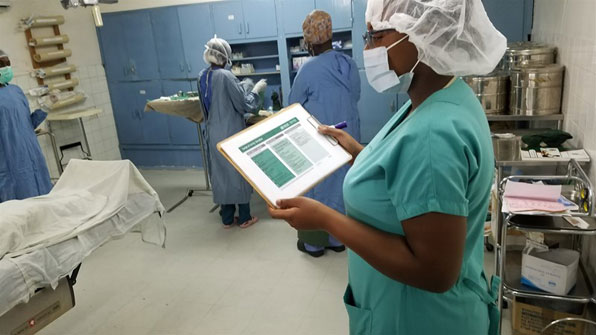
The WHO Surgical Safety Checklist: A Simple Tool That’s Saving Lives in Operating Rooms Worldwide
Surgery saves lives — but surgery itself carries risk. Every year, more than 300 million operations are performed worldwide, and despite decades of medical progress, complications still occur in up to 25% of inpatient procedures. In parts of sub-Saharan Africa, the mortality rate from general anesthesia alone is as high as 1 in 150 — a risk that’s almost unthinkable in a well-resourced hospital.
The good news: much of this harm is preventable. One of the most effective tools for preventing it isn’t a new drug or piece of equipment. It’s a simple, two-minute checklist.
This is the story of the WHO Surgical Safety Checklist — what it is, why it works, and what the latest global data tells us about the state of surgical safety today.
Why Surgical Safety Is a Global Health Priority
For years, surgical safety was overlooked as a public health issue. Health systems tracked infectious disease, maternal health, and chronic illness closely, but the risks patients faced during and after surgery received far less attention — especially in low-resource settings.
The World Health Organization (WHO) has identified three core reasons surgical harm has been allowed to persist at such scale:
- It isn’t treated like the public health issue it is. Surgical complications cause more deaths worldwide each year than HIV/AIDS, tuberculosis, and malaria combined — yet surgery rarely gets the same policy attention.
- The data is incomplete. Many countries, particularly in the developing world, don’t systematically track surgical outcomes, which makes it hard to measure progress or identify where interventions are needed most.
- Known safety practices aren’t consistently used. Surgical teams often already know what reduces risk — confirming the right patient, the right site, sterile technique, antibiotic timing — but under time pressure, these steps get skipped.
The Scale of the Problem, in Numbers
Recent global data paints a sobering picture of surgical risk and access:
- Over 300 million surgical procedures are performed worldwide each year (WHO).
- Up to 25% of inpatient operations result in some complication.
- The crude mortality rate after major surgery is estimated at 0.5–5%.
- In industrialized countries, nearly half of all adverse events among hospitalized patients are related to surgical care — and at least half of those are considered preventable.
- 5 billion people — about two-thirds of the world’s population — lack access to safe, timely, and affordable surgical and anesthesia care (Lancet Commission on Global Surgery).
- 16.9 million deaths a year are linked to conditions that are treatable with surgery — more than the annual death toll from HIV/AIDS, tuberculosis, and malaria combined.
- Only 6% of the world’s surgical procedures take place in the poorest countries, where a third of the global population lives.
- An estimated 143 million additional surgeries are needed each year in low- and middle-income countries to prevent death and disability.
These numbers show two intertwined problems: too many people can’t access surgery at all, and too many of the surgeries that do happen aren’t as safe as they should be. The checklist addresses the second problem directly — and helps close the first by making surgery viable in more settings.
The Safe Surgery Saves Lives Campaign
In response to this gap, WHO launched the Safe Surgery Saves Lives initiative, one of its Global Patient Safety Challenges. The centerpiece of the campaign is the WHO Surgical Safety Checklist, first introduced in 2008.
To design it, WHO’s working group borrowed a strategy from an unlikely industry: aviation. Pilots have relied on standardized pre-flight checklists for more than half a century to catch small errors before they become catastrophic ones. The idea translated directly to the operating room — a short, structured pause at key moments in surgery, where the team confirms the details that matter most.
Does the Checklist Actually Work? Here’s the Evidence
The checklist isn’t just a good idea — it’s one of the most rigorously tested interventions in modern surgical care.
In the original eight-country pilot study — spanning hospitals in Canada, India, Jordan, New Zealand, the Philippines, Tanzania, England, and the United States — researchers tracked outcomes for nearly 4,000 patients before and after the checklist was introduced. The results, published in the New England Journal of Medicine:
- Major complication rates fell from 11% to 7%
- In-hospital death rates fell from 1.5% to 0.8% — nearly cut in half
Follow-up research across both developed and developing countries has continued to confirm these findings, with broader implementation studies showing the checklist can reduce surgical complications and mortality by more than 30% when used consistently. Since then, it’s been adopted by the majority of surgical providers around the world.
What’s in the WHO Surgical Safety Checklist
The checklist has grown since its original release and now includes 19 items, organized around three natural pause points in any operation. It takes about two minutes to complete and is designed to be adapted to local settings — it isn’t a rigid, one-size-fits-all script.
1. Sign In — Before Anesthesia Is Administered
Before the patient is put under anesthesia, the checklist coordinator verbally confirms:
- The patient’s identity
- That the correct procedure and surgical site have been confirmed, and consent has been given
- That the surgical site is marked and a pulse oximeter is in place and working
- The patient’s risk of blood loss, airway difficulty, and known allergies
- That a full anesthesia safety check has been completed
Ideally, the surgeon is present for this step — they often have the clearest sense of anticipated blood loss or complicating factors.
2. Time Out — Before the First Incision
Just before the first cut, the entire surgical team pauses. Everyone introduces themselves and states their role (or simply confirms they already know one another, for repeat cases with the same team).
The team then confirms aloud:
- They have the correct patient, procedure, and surgical site
- Each team member’s key concerns and plan for the operation
- Prophylactic antibiotics were administered within the last 60 minutes, when applicable
- Relevant imaging is displayed and available
3. Sign Out — Before the Patient Leaves the Operating Room
Before the team disperses, a nurse confirms aloud:
- The name of the procedure performed, for the record
- That instrument, needle, and sponge counts are correct and reconciled
If counts don’t reconcile, the team searches the field, drapes, and surrounding area — and orders an X-ray if the discrepancy still can’t be resolved.
Why the Checklist Works So Well
The checklist’s success comes down to a handful of practical strengths:
- It’s evidence-based. Every item addresses a documented, common cause of preventable surgical harm.
- It’s adaptable. Hospitals can adjust it to their local workflow, equipment, and staffing without losing its core safety value.
- It’s proven across settings. Studies in both high-income and low-resource hospitals show comparable improvements.
- It reinforces good communication. The verbal, team-based format catches errors that a silent, individual checklist would miss — everyone hears the same information at the same time.
- It’s virtually free to implement. No special equipment or major budget is required, which is part of why it’s spread to hospitals in nearly every country.
The Real-World Challenge: Compliance
Here’s what many articles about the checklist leave out: having a checklist and consistently using it well are two different things.
Recent clinical audits highlight a persistent gap between adoption and adherence. Several 2024–2025 hospital studies found baseline compliance with the full checklist ranging from roughly 58% to 78%, even in hospitals that had formally adopted it — often improving only after a targeted staff training or audit-feedback intervention. The most commonly skipped items tend to be verbal confirmations that feel redundant to busy teams, like antibiotic timing and full team introductions.
This matters because the checklist’s benefits are strongest when every item is completed as intended — not just checked off on paper. WHO’s 2024 Global Patient Safety Report reinforces this point, finding that surgical units, alongside intensive care and emergency departments, have some of the highest rates of preventable patient harm of any care setting. A checklist in a drawer doesn’t save lives; a checklist embedded in team culture does.
How to Access the WHO Surgical Safety Checklist
If your surgical team hasn’t implemented the checklist yet — or wants to make sure you’re using the most current version — WHO provides free resources, including:
- The downloadable checklist (available in Arabic, Chinese, English, French, Portuguese, Russian, and Spanish)
- The full WHO Surgical Safety Checklist implementation guide
- Supporting tools and training materials
You can find all of these at WHO’s Safe Surgery resource page.
Best practice: print or download a fresh checklist for every surgical case, and file a completed copy with the patient’s permanent medical record. Treat it as a minimum standard of care — not an optional formality.
Frequently Asked Questions
What is the WHO Surgical Safety Checklist? It’s a free, 19-item checklist developed by the World Health Organization to reduce preventable harm during surgery. It’s organized into three phases — Sign In, Time Out, and Sign Out — and is used by surgical teams around the world.
Does the checklist actually reduce deaths? Yes. The original pilot study found in-hospital deaths dropped from 1.5% to 0.8% after implementation, and broader studies since have shown reductions in complications and mortality of over 30% with consistent use.
Is the checklist required by law? No — it isn’t a legal mandate in most countries, but it’s widely considered a minimum standard of surgical care and is required by many hospital accreditation bodies and short-term surgical mission organizations.
Is the checklist free to use? Yes. WHO provides the checklist, implementation guide, and training materials at no cost, in multiple languages.
The Bottom Line
Surgical safety is one of the most under-recognized public health challenges in global medicine — but it’s also one of the most solvable. The WHO Surgical Safety Checklist doesn’t require new technology, extensive funding, or years of training. It requires a team willing to pause, communicate, and confirm the basics — every time.
That two-minute pause is, quite literally, saving lives.
Sources
- World Health Organization, Patient Safety fact sheet, who.int
- World Health Organization, Safe Surgery — Quality of Care and Patient Safety, who.int
- World Health Organization, Global Patient Safety Report 2024
- Haynes, A.B., et al. “A Surgical Safety Checklist to Reduce Morbidity and Mortality in a Global Population.” New England Journal of Medicine, 2009.
- Weiser, T.G., et al. “Perspectives in Quality: Designing the WHO Surgical Safety Checklist.” International Journal for Quality in Health Care, 2010.
- Lancet Commission on Global Surgery, “Global Surgery 2030: Evidence and Solutions for Achieving Health, Welfare, and Economic Development,” The Lancet, 2015.
- Recent WHO Surgical Safety Checklist compliance audits, 2024–2025 (Cureus, JHWCR)