Walking in Her Shoes: The Power of Empathy in Global Health
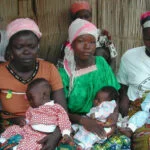
Picture this: a well-meaning nurse from a wealthy country stands before a young mother in rural Liberia, clipboard in hand, explaining why she must boil all drinking water for 3 minutes. The mother nods politely, but behind her tired eyes lies a reality the nurse or educator cannot fathom: she’s already juggling the care of three children under five, walking miles each day to collect wood for cooking, and water for drinking, struggling to find enough food to feed her family. The suggestion to add another task to her overwhelming daily burden feels impossible.
This scenario plays out countless times across the developing world, where health professionals from wealthy countries arrive with the best intentions but lack the profound understanding needed to truly serve the communities they hope to help. The gulf between the wealthy countries and low- and middle-income countries isn’t just about resources: it’s about lived experience, daily reality, and the crushing weight of survival that shapes every decision a mother makes.
The Life-Changing Power of Walking in Her Shoes
If we are from a wealthy country, before teaching anything about health education in a poor village community, we must learn and gain perspective. Before we can effectively serve, we must first experience life through the eyes of those we aim to help. This is true even in our own countries when serving in poor communities. Greg Boyle, author of Tattoos on the Heart, says it this way: “We must learn to stand in awe at the burdens the poor have to carry, instead of in judgment of how they carry it.”
Too often, short-term mission volunteers show up in a village with little or no understanding of the life complexities of the people they intend to serve. They sleep in hotels and eat restaurant food and then attempt to speak into the lives of people in poor communities.
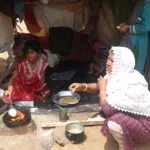
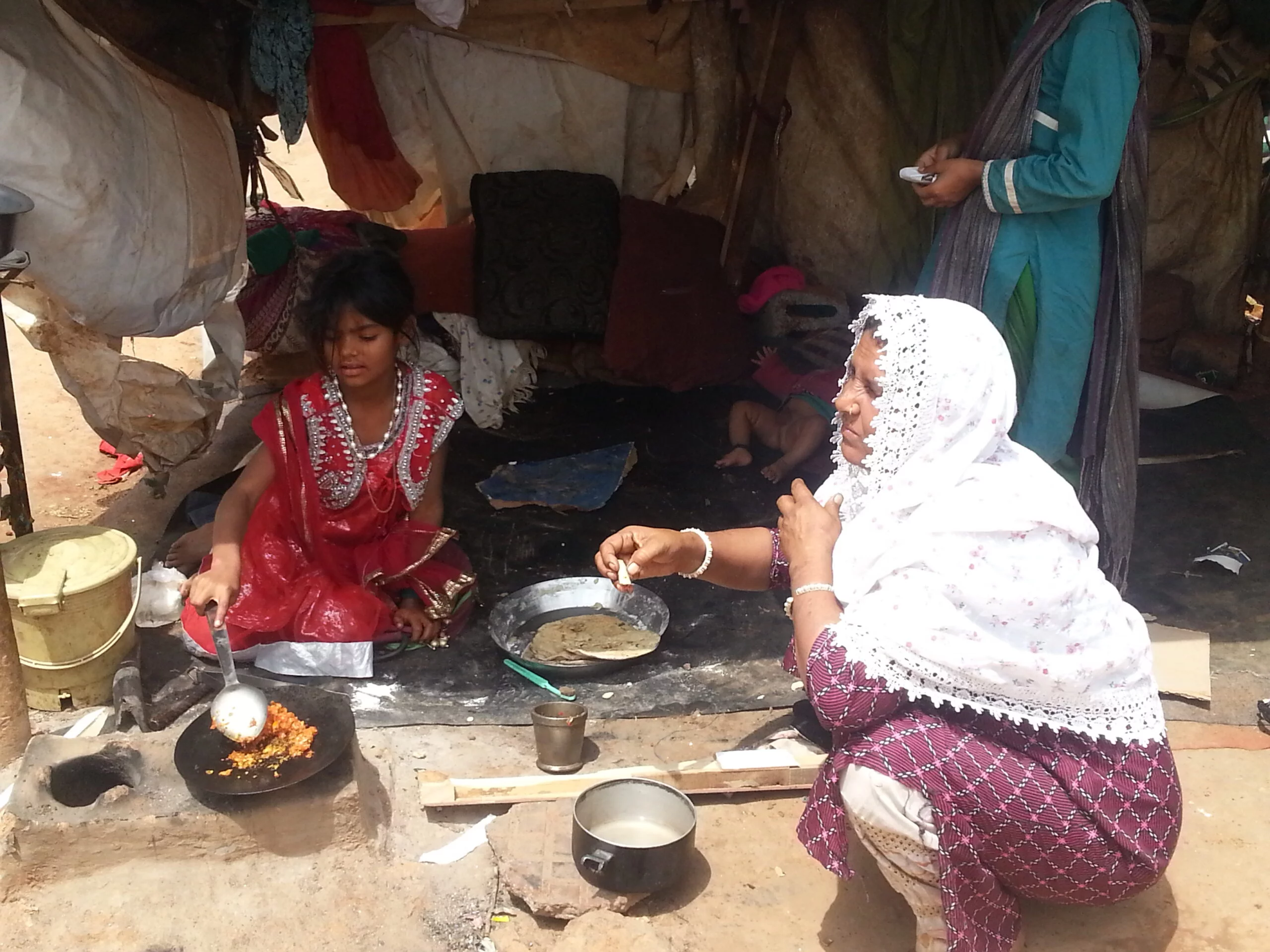
Long-term medical mission workers also have a similar separation from the villages. They often live in communities with walls, often in air-conditioned houses, which doesn’t allow for a complete understanding of the life complexities of their patients either. I encourage every volunteer and long-term worker to spend time overnight in a village and, if possible, assume some of the responsibilities of a young mother. Within a week, a new understanding of poverty emerges. A day in the village may begin after awakening on a cardboard bed on a dirt floor at 4:30 AM when the rooster’s crow signals the start of another grueling day. Awakening not to alarm clocks and coffee makers, but to the immediate demands of hungry children and the daunting task list that stretches ahead. They must tend the fire, prepare meals from scratch over open flames, and begin the endless cycle of caring that defines motherhood in a developing world village.
As the day unfolds, the physical exhaustion sets in. Walking miles to collect wood for cooking, and water for drinking, hauling heavy bundles on their backs, washing clothes by hand in the river: every task becomes a lesson in endurance. But it’s the emotional weight that proves most overwhelming: the constant worry about having enough food, the fear when a child develops a fever with no clinic nearby, and the heartbreak of choosing between basic necessities and medical care because there simply isn’t money for both.
“I thought I understood poverty,” shared Dr Sarah, a volunteer who spent just a week in a remote village in Honduras with a young mom. “But I had no idea about the mental exhaustion of making impossible choices every single day. When I suggested things like boiling water before this experience, I didn’t realize how hard her day already was and how much I was adding to the list of burdens.
Beyond Surface-Level Solutions: The Complexity of Daily Survival
In remote villages, help isn’t a phone call away: it’s hours, sometimes days of walking over difficult terrain. When a child becomes ill, the weight of decision-making falls entirely on the mother’s shoulders. Should she spend precious money on medicine or food? Should she walk for many hours or sometimes days to the distant clinic, leaving her other children unattended? These aren’t theoretical dilemmas: they’re daily realities that shape every aspect of health decision-making. It is also why so many children arrive on the verge of death to hospitals and clinics where we serve.
Healthcare professionals from wealthy countries must learn that effective community health education and even the care we provide must account for these impossible choices. We must discover that asking a mother to adopt new health practices without understanding her life, isn’t education. It can and often does come across as condescending. In many circumstances, it is not a lack of knowledge preventing health behavior change, its life circumstances or cultural context. Real health education begins with deep empathy and ends with practical, culturally-sensitive solutions that work within existing realities, not against them.
The Humility Revolution: From Teachers to Learners
The most profound transformation occurs when health professionals going to serve short-or long-term in low- and middle-income countries (LMIC’s) recognize their role must fundamentally shift from teacher to student. In my book “When Healthcare Hurts,” this is Best Practice Guideline 2 – go as a learner, not as a teacher.
For those who are willing to live in a village for a time, even if only a week or two, transformation takes place. Pride gives way to humility, assumptions crumble under reality, and a beautiful truth emerges: the local community holds wisdom that no medical or nursing degree can provide.
More to be Caught Than to be Taught
There is an old community development saying that “There is more to be caught than to be taught.” It is a saying that takes on new meaning after living for a time in a poor village. Health professionals must learn that demonstrating positive health practices while living alongside community members creates far more impact than any lecture ever could. They discover that solutions often come not from foreign expertise, but from listening deeply to local knowledge and building upon existing strengths.
This shift from expert to learner transforms not just the healthcare professionals’ approach, but the entire dynamic of health education. Instead of imposing external solutions, educated by this experience, team members learn to ask better questions: “What challenges do you face in keeping your family healthy?” “What methods have you tried?” “How can we work together to find solutions that fit your life?”
The emotional breakthrough comes when health professionals realize that the mothers they serve aren’t recipients of charity: they’re partners in problem-solving, experts in their own context, and the key to improving health behaviors for their entire community.
Building Sustainable Community Health Through Local Leadership
The ultimate goal of preparing health professionals and health educators extends far beyond individual transformation: it’s about creating sustainable systems that outlast any international health workers’ involvement. The most effective health education programs focus not on reaching the general population directly, but on training and empowering local community educators who can continue the work long after international volunteers return home.
This approach mirrors the proven Community Health Empowerment (CHE) model, where international volunteers serve as supporters and resources for local educators rather than primary teachers. The beauty of this system becomes apparent quickly: local educators understand cultural nuances, speak the language fluently, and most importantly, they’re not going to leave because the community is their home.
Essential Resources for Transformational Health Education
Several exceptional resources can guide those of us in wealthy countries in developing culturally-sensitive, effective programs:
Health Education Programs for Developing Countries www.hepfdc.info provides evidence-based resources specifically designed for teaching in exam rooms by healthcare professionals. These materials understand the time constraints and practical limitations of clinical settings while maximizing educational impact.
Health Books International, formerly known as Teaching Aids at Low Cost (TALC), offers crucial training materials for both volunteers and community members. Their UK-based program provides practical, affordable resources that can be adapted to various cultural contexts.
The Global CHE network https://chenetwork.org/ serves as an excellent resource for those committed to community-based health education. Completing a CHE Training of Trainers course provides essential competence in community facilitation and sustainable program development.
The Hesperian Foundation https://hesperian.org offers perhaps the most comprehensive range of resources for community-based programs. Their materials are available in multiple languages, and their vast image library allows for cultural adaptation. Most remarkably, all Hesperian publication illustrations are available for download along with templates for creating locally-relevant posters and brochures.
Ready to learn more about effective medical mission strategies? Receive your free copy of When Healthcare Hurts: An Evidence-based guide for best practices in global health initiatives at https://www.healthservicecorps.org/whh-form/